
June 30, 2026
The Textiles Recycling Expo in Brussels brought together innovators, recyclers, brands, policymakers and stakeholders from across the textile value chain.

With a value chain spread across countries and continents, events likethe Expo provide an important opportunity for stakeholders to connect inperson, exchange perspectives and build partnerships. At the matterr booth, wemet with partners and new contacts and discussed developments in textilerecycling and the path towards greater circularity.
The event also highlighted an important reality: the technologies andinnovations needed for textile circularity already exist. What is needed noware the framework conditions that allow these solutions to scale.
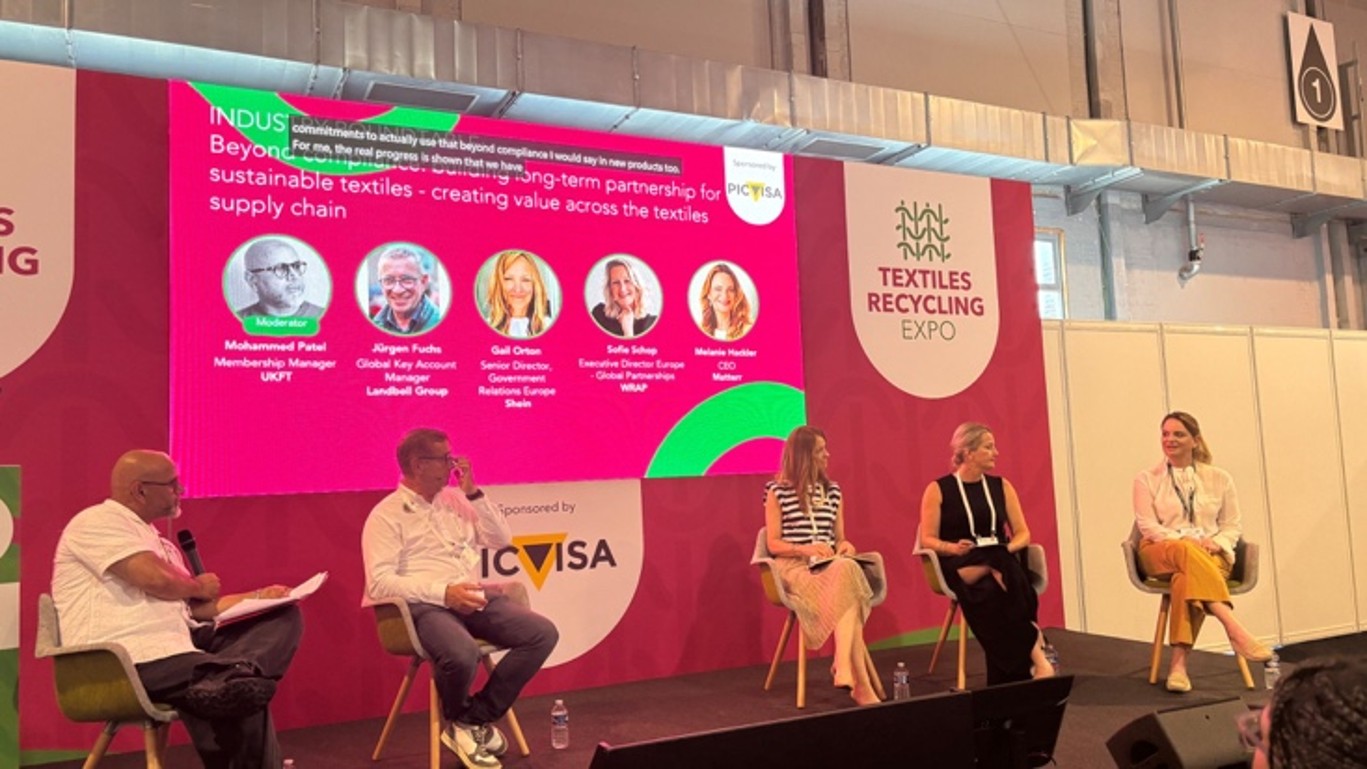
Industry Perspectives on Scaling Textile Circularity
The exchange extended beyond individual conversations. The Expo alsofeatured a programme of panel discussions, addressing key challenges fortextile circularity.
matterr CEO Melanie Hackler contributed to the panel discussion “Beyond Compliance: Building Long-Term Partnerships for Sustainable Textiles -Creating Value Across the Textile Supply Chain”, together with Sofie Schop from WRAP, Gail Orton from SHEIN and Jürgen Fuchs from Landbell Group. The panel explored how collaboration across the textile value chain can support the transition towards greater sustainability and circularity.
From matterr’s perspective, two aspects are particularly important:
· Scaling textile recycling requires stable and predictable framework conditions: Since building new recycling capacity requires significant investment, investors need confidence that the regulatory and economic environment will support these investments over time.
· EPR must go beyond ensuring compliance: It should also help finance the collection, sorting and recycling systems in a responsible way. A well-designed EPR framework can help establish the market conditions that enable the scale up of a circular textile industry.
The discussions in Brussels reinforced the importance of connecting technology with the right framework conditions. Regulatory clarity, investment certainty, infrastructure and economic alignment across the value chain will be essential to scale textile recycling and build viable circular business models.

